
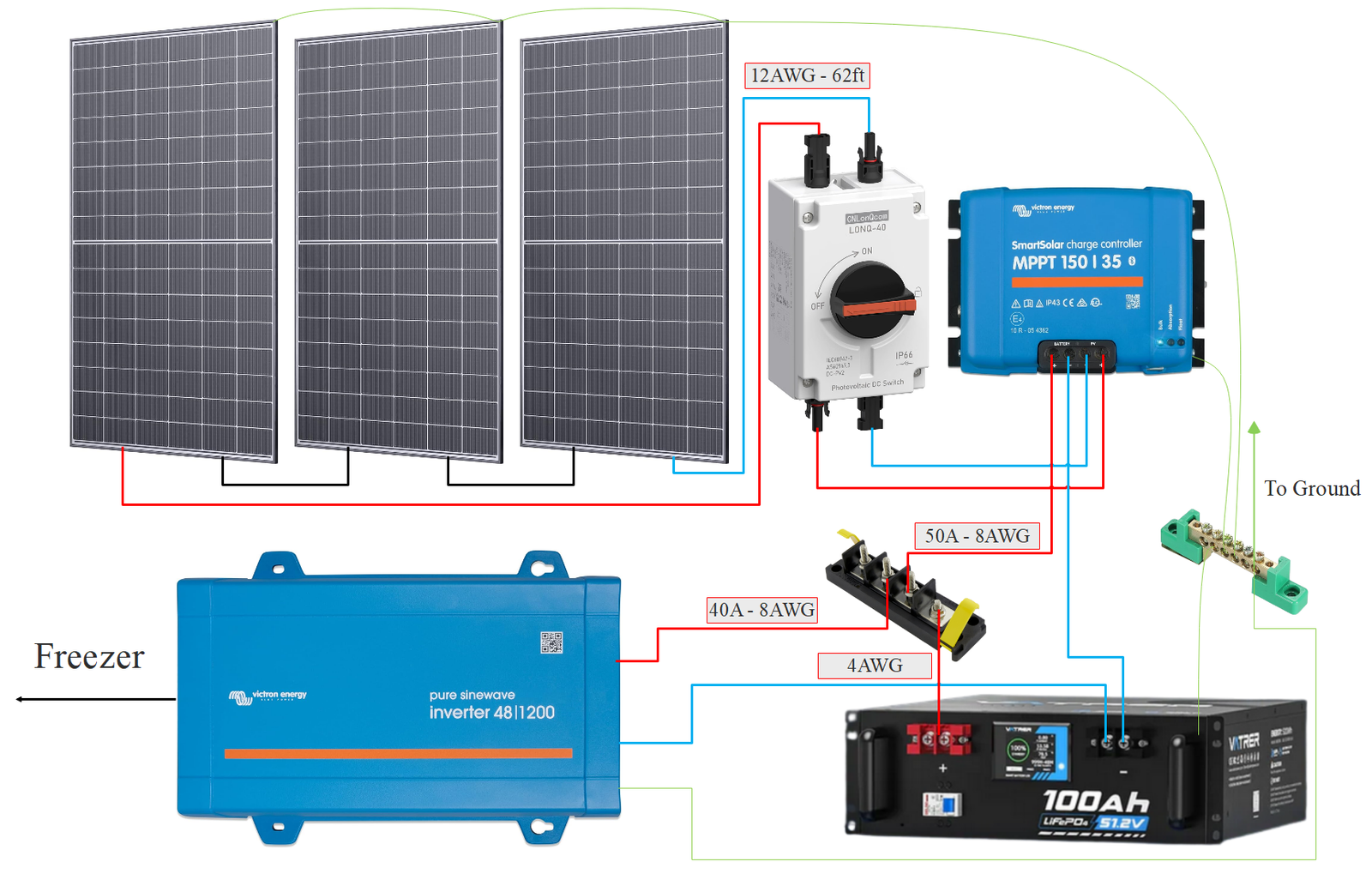
Parts list
3x 425W solar panels
1x 12AWG-4mm² PV cable (red and black)
1x 2-pole PV disconnect switch
1x Victron SmartSolar MPPT 150/35 charge controller
1x 48V 100Ah LiFePO4 battery
1x Victron Phoenix Inverter 48/1200 (120V)
1x 2-way fuse holder
1x 50A fuse (charge controller)
1x 40A fuse (inverter)
1x 8AWG-10mm² battery cable (red and black)
1x 4AWG-25mm² battery cable (red)
1x Ground busbar
1x Grounding wire (green)
Cable lugs
3x Solar panel mounting kit
About this system
This system is designed to run one freezer or fridge completely off-grid, 24 hours a day. My 13-year-old upright freezer uses about 800Wh per day. Once you add the inverter’s losses and its own standby power, the system needs to supply about 1,250Wh per day. The three 425W solar panels produce around 3,800Wh on a day with three sun hours. That’s enough to run the freezer and recharge the battery at the same time.
The 48V 100Ah lithium battery stores about 5kWh. That’s enough to keep the freezer running for three days without any sun. After a cloudy stretch, it takes about two sunny days to fully recharge the battery while the freezer keeps running. This inverter uses pure sine wave technology and delivers enough surge power to start the freezer’s compressor. It also has low standby consumption. As a result, it does not waste your battery overnight.
There are also things this system can’t do. It’s sized for one freezer or one efficient fridge, not both, and not a whole house. You can charge phones or run a few LED lights on sunny days, but the inverter is limited to 1,200W. That rules out microwaves, coffee makers, space heaters and air conditioners. If you get more than three cloudy days in a row, the battery will eventually run empty, and the freezer will stop until the sun comes back. If you live somewhere with less than three sun hours in winter, you’ll need more solar panels. Finally, lithium batteries can’t be charged below freezing, so keep the battery indoors or in an insulated space if your winters get cold.
If you want to run a different fridge or freezer, check how much energy it uses per day first. You can measure it with a Kill A Watt meter, or take the yearly kWh figure on the label, add 30%, and divide by 365. If it uses a lot more than 800Wh per day, you’ll need a bigger system.